
US beef prices stay at record highs amid 75-year herd low
US beef prices stay at record highs amid 75-year herd low
On Thursday, April 16, 2026, U.S. agricultural economists confirmed that US beef prices will persist at record highs indefinitely due to the national cattle herd hitting a 75-year low. Years of severe drought, soaring feed costs, and biological constraints mean immediate global market relief, including in Dubai, remains impossible.
Supply constraints drive record US beef prices
The primary driver behind these sustained, historic US beef prices is a severe structural deficit in livestock inventory. Official data from the United States Department of Agriculture indicates that the national herd has contracted to 86.2 million head, the lowest absolute level recorded since 1951. This historic low is the cumulative, devastating result of multi-year droughts across the American West and Plains, which previously forced desperate ranchers to liquidate their breeding stock prematurely due to vanishing grasslands.
This domestic structural deficit is heavily compounded by international trade disruptions. An ongoing outbreak of the New World Screwworm—a parasitic fly—in Mexico has led to emergency border closures, cutting off over one million head of annual feeder cattle imports to the United States.
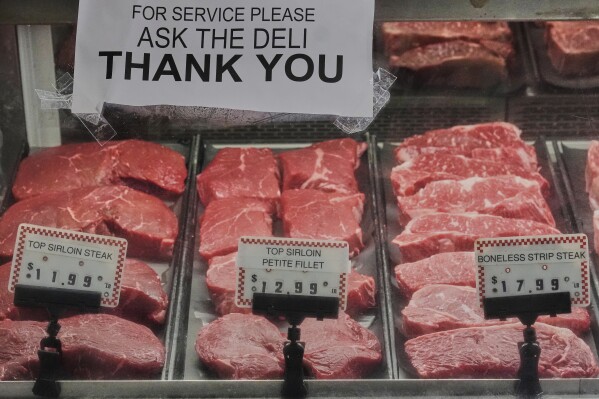
As a direct result of these tightening bottlenecks, retail ground beef surged to an unprecedented $6.69 per pound late last year, reflecting a staggering 72% increase since 2020, aligning with inflationary trends tracked by the U.S. Bureau of Labor Statistics.
The biological timeline of herd expansion
Consumers expecting rapid market corrections are fundamentally misunderstanding the biological and financial realities of commercial cattle farming. Rectifying the current US beef prices requires ranchers to actively retain female cattle (heifers) for breeding rather than sending them to processing facilities.
Paradoxically, this retention immediately tightens the active beef supply even further, driving short-term retail costs up before any long-term market stabilization can occur.
Furthermore, the biological timeline governing livestock is entirely inflexible. Agriculture Secretary Tom Rollins noted that timeline relief would be measured in months, though industry experts point out that new calves do not reach the market for 18 to 24 months. The American Farm Bureau Federation projects that substantive herd expansion is unlikely to materialize until at least 2028.
Impact on Dubai’s premium hospitality sector
The ripple effects of these escalating US beef prices extend far beyond American borders, directly impacting international hospitality hubs. Here in the UAE, the supply chain crunch is actively reshaping procurement strategies for high-end dining sectors. Premium steakhouses across the Dubai International Financial Centre (DIFC) and Palm Jumeirah that rely heavily on imported American Prime and Choice cuts are being forced to adapt to shrinking margins.
“We are completely restructuring our import logistics this quarter,” said Tariq Mansour, a senior meat purveyor operating out of Dubai’s Jebel Ali Free Zone. “The soaring US beef prices have made American Prime financially unviable for many mid-tier restaurants. We are being forced into a massive procurement pivot toward Australian and Brazilian alternatives just to stabilize menu costs for our hospitality clients.”
As long as the foundational American breeding stock remains severely depressed, elevated meat costs will continue to define the market throughout 2026. The agricultural sector requires sustained profitability and highly favorable weather patterns to confidently begin the slow, incredibly capital-intensive process of rebuilding the national herd.
📲 Follow Yalla TV For Live Courtroom Updates
Do not miss a single breaking update. Join the Yalla TV community across all our digital platforms for real-time alerts, exclusive video breakdowns, and behind-the-scenes entertainment coverage:
-
Instagram: Follow @YallaTV on Instagram
-
TikTok: Watch viral updates on TikTok
-
X (Twitter): Get breaking text alerts on X
-
Facebook: Join the conversation on Facebook
-
LinkedIn: Follow our corporate news on LinkedIn
-
Threads: Chat with our hosts on Threads