
Nissan Sales Goal: 7 Urgent Sad China Rival Facts
Nissan Sales Goal: 7 Urgent Sad China Rival Facts
The global automotive sector does not respect historical prestige; it only respects raw, unmitigated survival. The Nissan sales goal has officially saturated the global economic news cycle today.
As a brutally honest correspondent based right here in the logistical heart of Dubai, I must state that this Nissan sales goal is a masterclass in corporate desperation.
We are currently witnessing a terrifying era where the Nissan sales goal blatantly emulates the aggressive, cutthroat tactics of emerging Chinese competitors.
The highly publicized Nissan sales goal was explicitly designed to distract from looming international supply chain failures and deep domestic financial disasters.
To understand the sheer gravity of this moment, we must meticulously decode the Nissan sales goal timeline from the ground up.
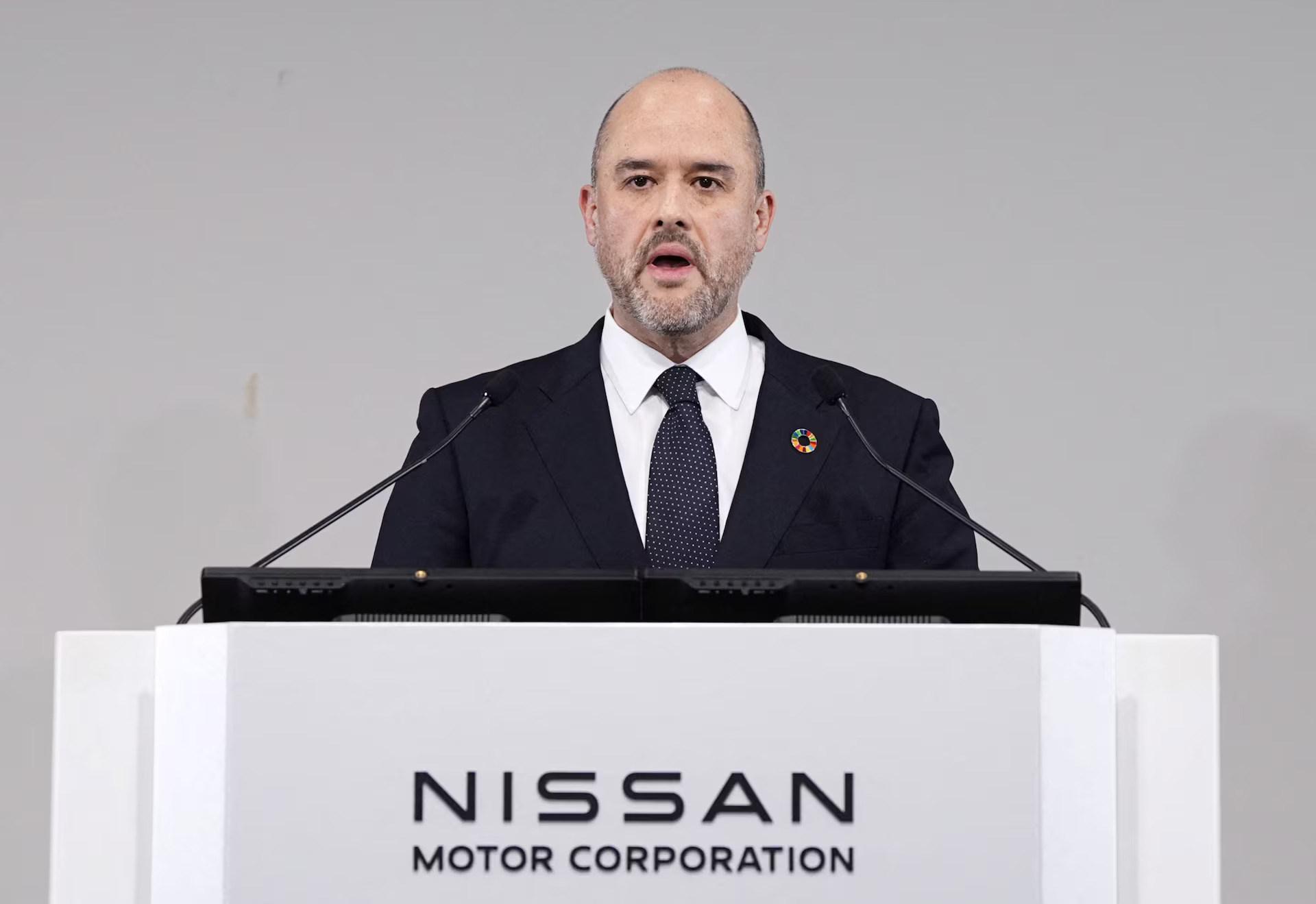
On Tuesday, Yokohama executives doubled down on a massive Nissan sales goal aiming to push one million additional vehicles annually by 2030.
When we examine the corporate framing, the Nissan sales goal reveals a highly orchestrated, cynical aesthetic designed to calm terrified shareholders.
Seasoned industry critics immediately recognized that the Nissan sales goal was completely manufactured for appeasement rather than grounded in logistical reality.
Analyzing the brutal Nissan sales goal strategy
It takes immense, rigorous market positioning to achieve any massive Nissan sales goal in today’s ruthless, fiercely competitive electric vehicle climate.
The idea that a deeply leveraged legacy automaker can easily hit this Nissan sales goal is an absolute insult to public intelligence.
Yet, the administration pushed this narrative aggressively to highlight their domestic Nissan sales goal policies and distract from a recent credit downgrade.
Dubbed “The Arc,” this strategic pivot requires the Nissan sales goal to heavily leverage Chinese manufacturing hubs for global export.
Economists aggressively argue that the Nissan sales goal oversimplifies massive, systemic economic inequalities facing legacy automakers today.
The interaction between the executives and the financial press regarding the Nissan sales goal was intensely uncomfortable to witness.
This awkward, heavily scripted exchange highlights exactly why the Nissan sales goal feels incredibly forced and manipulative to seasoned analysts.
By slashing prices and accelerating hybrid vehicle launches, the Nissan sales goal is a direct, unashamed copy of foreign competitor playbooks.
Why the Nissan sales goal mimics Chinese rivals
The undeniable truth is that the Nissan sales goal heavily relies on the exact strategies pioneered by brands like BYD and Xiaomi.
The corporate strategy dictates producing vehicles “in China, for China, to the world,” a mantra embedded deep within the Nissan sales goal.
However, emulating a rival is a silent, profound confession of ultimate defeat.
The Nissan sales goal completely abandons decades of Japanese automotive exceptionalism in favor of rapid, cheap, and frantic proliferation.
Chinese electric vehicle makers are pushing deeper across Latin America, utilizing aggressive pricing to offload surplus production.
The sudden influx has led governments in Mexico and Brazil to hike tariffs to blunt the impact from the surge in Chinese imports.
The Nissan sales goal assumes it can fight this tidal wave with mere legacy brand recognition.
The reality is that the Nissan sales goal is heavily reliant on a market that is already completely saturated with cheaper, faster, and more technologically advanced alternatives.
The company aims to reduce the cost of next-generation EVs by 30 percent to meet the Nissan sales goal, but even this massive internal cut barely keeps pace with the aggressive pricing wars initiated by Beijing.
Global crises overshadow the Nissan sales goal
While cameras focused blindly on the Nissan sales goal, the global supply chain was literally burning under geopolitical friction.
The jarring juxtaposition of the Nissan sales goal against the blockade of Middle Eastern ports is deeply, profoundly unsettling.
The glaring reality is that the Nissan sales goal feels like a grotesque parody of corporate governance when export lanes are frozen.
Watching the Nissan sales goal unfold while the global shipping network fractures is an entirely surreal journalistic experience.
The corporate architects behind this stunt are dealing with their own snarling anxieties regarding the Nissan sales goal.
With a deeply troubling debt-to-equity ratio resting at a staggering 1.86, sheer financial survival is paramount.
The Nissan sales goal is the physical, corporate manifestation of that exact distraction technique to hide negative earnings multiples.
The Nissan sales goal completely strips away the polite, comforting illusions of serious international trade stability.
Will the Nissan sales goal sway international investors?
Polling analysts are fiercely debating whether the Nissan sales goal will successfully shift independent shareholders from a “Sell” to a “Hold” position.
Do these highly produced corporate roadmap moments actually resonate with investors currently struggling with global inflation?
The internet immediately fractured following the broadcast of the Nissan sales goal across major global financial networks.
Memes regarding the Nissan sales goal completely obscured the severe, underlying geopolitical tensions globally.
The Nissan sales goal serves as the ultimate, undeniable proof that the market craves shiny entertainment over pragmatic fiscal policy.
Frame by frame, the Nissan sales goal presentation exposes the desperate, hollow mechanics of modern automotive populism.
It is a calculated distraction, meticulously designed to feed the algorithmic beast of modern trading networks.
The Nissan sales goal will fundamentally, permanently reshape the long-term strategic calculations of every corporate board in Asia.
Unpacking the Nissan sales goal mechanics
The Nissan sales goal demonstrates that the ultimate lever of power remains the physical manipulation of investor media.
In a supposedly digital age, we are brutally reminded that physical supply chains dictate our ultimate corporate survival.
The Nissan sales goal will be dissected as a critical turning point in global automotive history by future business historians.
But what actually happens when the very infrastructure required to meet the Nissan sales goal collapses under intense geopolitical pressure?
The Japanese auto sector exports over eight hundred thousand vehicles annually to the Middle East alone.
If the current blockades in the Strait of Hormuz persist, the mathematical foundation of the Nissan sales goal instantly crumbles into dust.
In Dubai, we sit at the absolute epicenter of these logistical nightmares, watching the Nissan sales goal completely ignore skyrocketing maritime insurance premiums.
You cannot meet the Nissan sales goal if your massive Ro-Ro cargo ships are sitting idle in terrified harbors.
You can review the complex history governing international shipping lanes at the United Nations Human Rights Council.
To understand the shifting geopolitical alliances affecting trade, I urge readers to review our comprehensive Internal Diplomatic Standings Hub.
Middle East instability and the Nissan sales goal
The brutal interaction between high-stakes geopolitics and the Nissan sales goal simply cannot be overstated.
When vital shipping arteries are choked off by war, aluminum and crude oil prices violently surge upward.
This bottleneck instantly invalidates the optimistic profit projections heavily embedded within the Nissan sales goal.
The Nissan sales goal ignores the new, unyielding reality of a permanent, deep scar on international trade relations.
We must adapt to the constant, underlying thrum of military tension while corporate executives distribute ambitious PowerPoint slides.
International logistics firms must entirely restructure their fragile supply chains, properly accounting for the permanent distraction in manufacturing hubs.
The Nissan sales goal makes the simple, everyday act of governing a global company an exercise in high-stakes reality television.
The feral, unpredictable core of global commerce has been entirely exposed, and it cannot be easily hidden behind a sleek corporate logo.
The human toll behind the Nissan sales goal
Ultimately, we are all unwilling passengers on this fragile, deeply interconnected global economic ship.
The Nissan sales goal is a massive, dark storm of distraction we must collectively weather as consumers, employees, and taxpayers.
It forces us to confront the snarling, wounded nature of our modern corporate world and its deeply flawed leaders.
We must decide, collectively, exactly how we will survive the turbulent, incredibly dark economic waters that lie ahead.
If you want to track the immediate, live fallout of this devastating corporate shift, bookmark our internal Global Geopolitics News Hub.
The Nissan sales goal was a corporate Trojan horse, delivering a highly sanitized economic message while actively burying a burgeoning supply chain war.
This absolute failure of corporate transparency is arguably the most terrifying aspect of the entire Tuesday spectacle.
When executives prioritize a viral milestone over the potential destruction of international shipping lanes, market integrity is severely compromised.
The final verdict on the Nissan sales goal
The Nissan sales goal effectively blinded the financial watchdog, replacing sharp journalistic fangs with a momentary, stunned silence.
We must demand substantially better from our institutions, our corporate leaders, and the regulatory agencies tasked with holding them accountable.
The Nissan sales goal is a symptom of a much deeper, far more insidious societal rot infecting modern capitalism.
It is the inevitable result of treating the global economy as a continuous, endless television pilot designed exclusively for investors.
As we look toward the end of 2026 and beyond, the precedent strictly set by the Nissan is deeply chilling.
Policy will no longer be debated on its merits; it will be sold via stunts, props, and completely unrealistic vehicle delivery promises.
The global community deserves a far more dignified, serious approach to industrial governance and economic forecasting.
Until that happens, we are doomed to repeat the exact same shallow, incredibly dangerous cycles of corporate distraction.
The Nissan sales goal will be recorded not as a moment of innovation, but as a monument to sheer, unadulterated distraction.
We will not look away from the blockades, the geopolitical feuds, and the actual crises threatening to tear the global supply chain apart.
The Nissan may have temporarily won the morning news cycle, but economic history will be the ultimate, brutal judge.
Stay hyper-vigilant, stay constantly informed, and absolutely never trust the sanitized narratives pushed by complacent, failing global administrations.
📲 Follow Yalla TV For Live Courtroom Updates
Do not miss a single breaking update when the judge hands down the final verdict. Join the Yalla TV community across all our digital platforms for real-time alerts, exclusive video breakdowns, and behind-the-scenes entertainment coverage:
-
Instagram: Follow @YallaTV on Instagram
-
TikTok: Watch viral updates on TikTok
-
X (Twitter): Get breaking text alerts on X
-
Facebook: Join the conversation on Facebook
-
LinkedIn: Follow our corporate news on LinkedIn
-
Threads: Chat with our hosts on Threads