
Dubai Tourist Arrested Filming: 3 Crucial UAE Cyber Laws You Must Know
Dubai Tourist Arrested Filming: 3 Crucial UAE Cyber Laws You Must Know
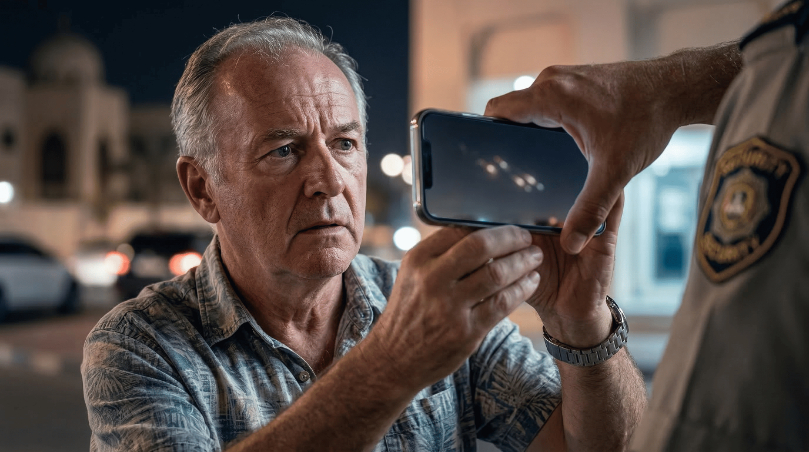
Overnight, reports confirmed that a 60-year-old British tourist was taken into custody at a police station in the Bur Dubai district. His alleged crime was not theft or violence, but rather pulling out his smartphone.
During the recent geopolitical tensions that resulted in aerial interceptions over UAE airspace, this individual allegedly recorded the events and attempted to share them. Almost immediately, he became the latest Dubai tourist arrested filming restricted activities.
While taking a video of the sky might seem like a harmless reflex for a generation raised on smartphones, the UAE government views the recording and dissemination of emergency events, military movements, or unverified security incidents as a direct threat to public order and national stability.
Understanding the UAE Cybercrime Law
To understand why a Dubai tourist arrested filming is a standard legal procedure rather than an overreaction, you must look at the UAE Cybercrime Law (Federal Decree-Law No. 34 of 2021). The UAE is consistently ranked as one of the safest countries in the world, and they maintain that safety through strict digital governance.
There are three major legal traps that expats and tourists frequently fall into:
-
Filming Restricted Areas and Emergencies: It is strictly forbidden to photograph or film military bases, security installations, or active emergency response scenes (including police, fire, or aerial defense actions).
-
Spreading Rumors and Fake News: Article 52 of the Cybercrime Law explicitly criminalizes the broadcasting, publishing, or sharing of false news, rumors, or provocative information that could incite public panic.
-
Invasion of Privacy: Even in non-emergency situations, filming individuals without their explicit consent and posting it online can lead to massive fines and imprisonment.
When the Dubai tourist arrested filming raised his phone, he crossed the line from being a bystander to potentially acting as a broadcaster of sensitive national security data.
The Social Media Trap for Expats
At Yalla TV, we constantly monitor the digital landscape of the Middle East. The biggest mistake tourists make is assuming that the legal rules of their home country apply here.
In the pursuit of a viral video, people forget that the algorithm does not protect you from the law. A video of an interception might get you a million views on Instagram, but it will also immediately flag your IP address to local cyber authorities. The case of the Dubai tourist arrested filming is a textbook example of social media addiction overriding common sense.
How to Stay Safe in the UAE
If you want to enjoy the ultimate luxury and safety of Dubai without facing deportation or jail time, you must follow these absolute rules during any public emergency or sensitive event:
-
Put the Phone Down: If you see police action, military movement, or aerial events, do not record it.
-
Do Not Share Unverified Clips: Even if you didn’t film it yourself, forwarding a video of a sensitive event to a WhatsApp group can make you legally liable for spreading rumors.
-
Rely on Official Sources: Only consume and share news from verified, government-backed agencies or premium licensed news hubs like Yalla TV.
The harsh reality of the Dubai tourist arrested filming is that ignorance of the law is never an excuse in the UAE. Enjoy the city, take photos of the Burj Khalifa, but leave the emergency reporting to the professionals.
What do you think about the UAE’s strict digital laws? Do they make you feel safer, or do you think tourists need more warnings at the airport? Let us know in the comments below.